


Start at $127/mo with

*6-month Self-Study
access included
| ● Score Improvement Guarantees unmatched in the industry | +130 Points |
715+ 99th Percentile |
|
| ● Streaming video led by top-scoring, expert instructors | 2,000+ video solutions |
400 hours of plus 2,000+ video solutions |
|
| ● Weekly live office hours with top-scoring GMAT instructors | |||
| ● 6-month access to the TTP Self-Study course | |||
| ● Personalized study plan and daily study calendar | |||
| ● 1,500+ lessons covering every GMAT concept & question type | |||
| ● 4,000+ Quant, Verbal, and Data Insight practice questions | |||
| ● 1,200+ digital Quant and Verbal flashcards + custom flashcard creation | |||
| ● Custom GMAT practice test builder to get you test-day ready | |||
| ● Intelligent performance analytics and detailed error tracking to target weaknesses | |||
| ● TTP AI Assist, your personalized, AI-driven assistant in the Self-Study course | |||
| ● Live online support from team of experts | 24/7 live support | 24/7 live support | |
TTP Founder & GMAT Expert
Scott Woodbury-Stewart

Architect of 6 top-rated test prep courses

20+
years of GMAT expertise

300,000+
TTP
students

45,000+
kudos and posts
(Top 3 GMAT Expert)

37,000+
karma points
on Reddit

A passionate teacher who is deeply invested in the success of his students, Scott founded Target Test Prep and spearheaded the development of TTP’s award-winning GMAT Self-Study course, which has been giving students a unique competitive advantage on the GMAT for more than a decade.
As the mastermind behind TTP’s world-renowned courses, Scott has a profound understanding of the knowledge, skills, and techniques a student needs in order to achieve a high score.


“When you seek simple solutions to complex problems, magical things happen.”
Scott Woodbury-StewartWith TTP OnDemand, Scott brings his background as a high school math and physics teacher and his vast experience as a global instructor for the GMAT, with over 30,000 hours of standardized test instruction, to comprehensive yet highly accessible video lessons that will help you develop the same deep mastery of the material that has led so many of his students to success at the world’s top business schools, including Harvard, Stanford, Wharton, Booth and Sloan. He’s your personal guide to acing the GMAT.
With TTP OnDemand, Scott brings his background as a high school math and physics teacher and his vast experience as a global instructor for the GMAT, with over 30,000 hours of standardized test instruction, to comprehensive yet highly accessible video lessons that will help you develop the same deep mastery of the material that has led so many of his students to success at the world’s top business schools, including Harvard, Stanford, Wharton, Booth and Sloan. He’s your personal guide to acing the GMAT.
SCOTT'S STUDENTS ACCEPTED TO





Unlock your full potential with 6 months of supercharged OnDemand GMAT prep.
OnDemand Course is a great fit for you if:
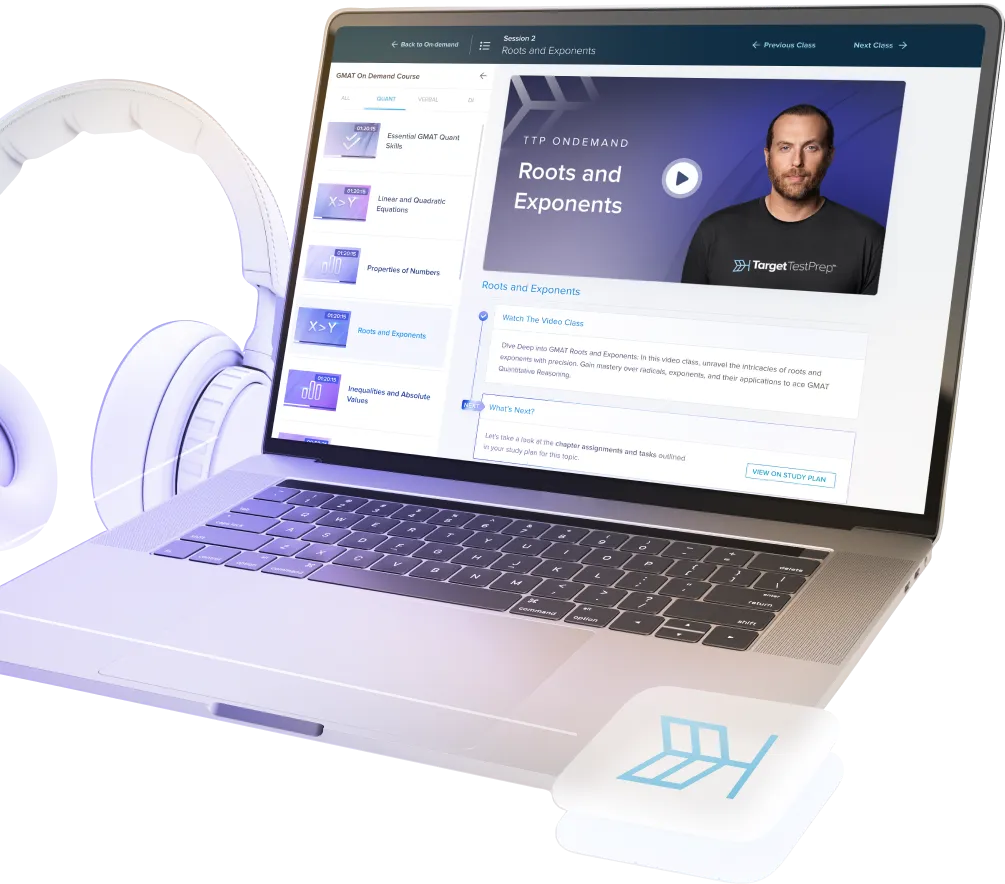
OnDemand combines the best features of private tutoring and live virtual classes with the accessibility of pre-recorded videos taught in a master class style for all skill levels.
For students who excel in a tutoring or classroom environment, but can’t fit scheduled sessions into their schedules, OnDemand is the perfect solution.
You get private lessons from an expert on your schedule and at your pace.

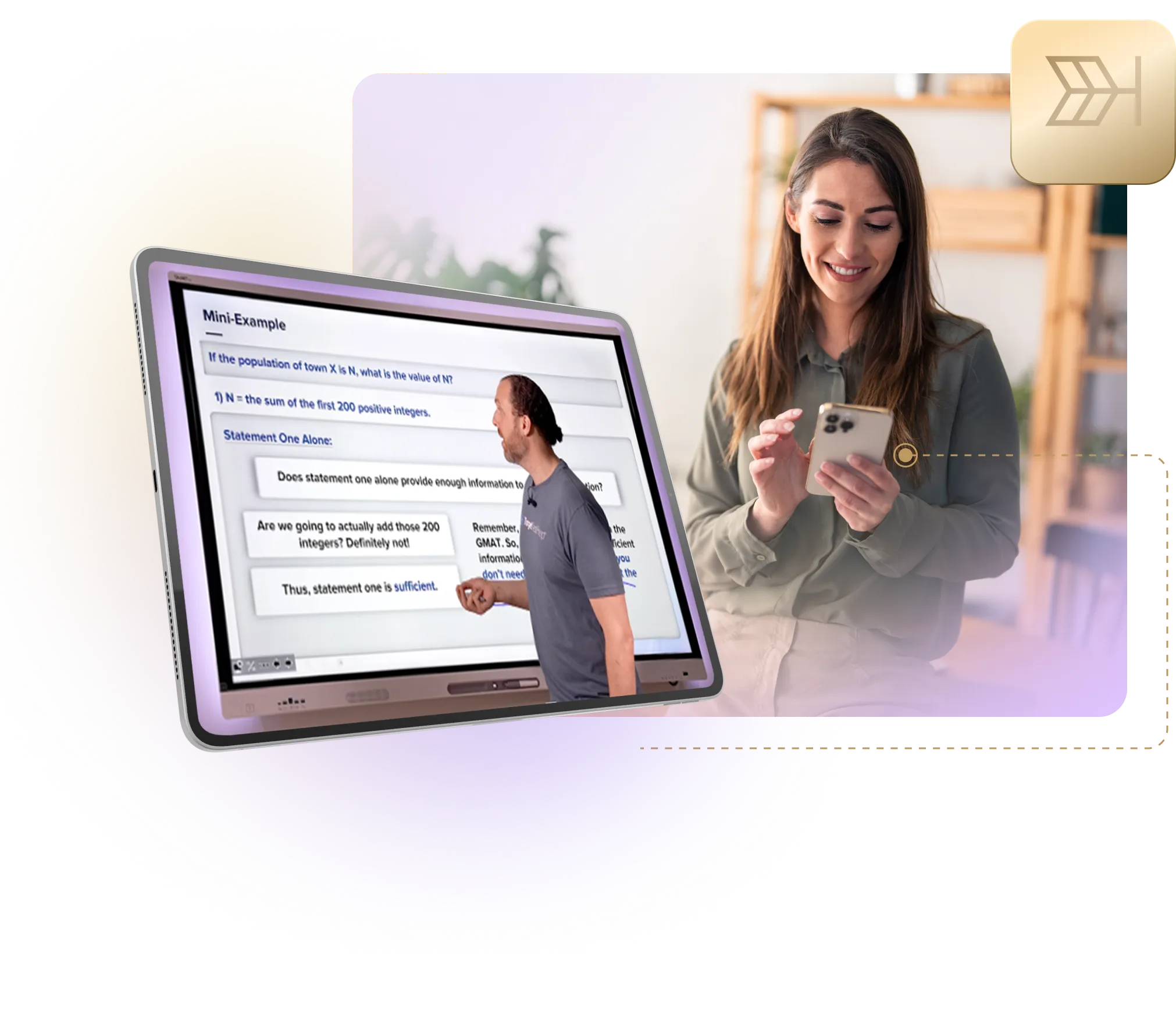
TTP’s experts are teachers first, and we recognize that different students have different learning styles.
OnDemand Course offers 400 hours of video lessons, allowing students who are primarily visual learners to better understand, digest, and apply the knowledge shared in TTP’s Self-Study course.
experience



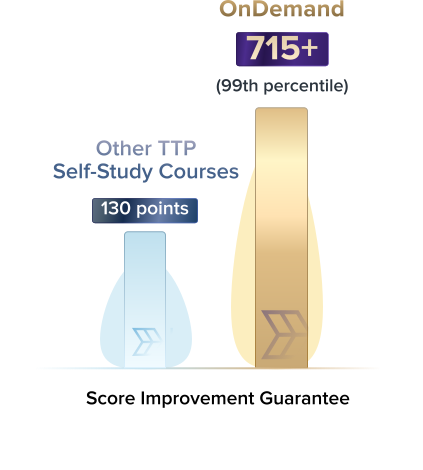
The TTP OnDemand course guarantees a 99th percentile (715+) score on the GMAT--the highest GMAT score guarantee anywhere.
With an immersive private classroom at your fingertips anytime and 6 months of access included, OnDemand gives you the tools to make your dream score a reality. All you have to do is put in the time and effort.
OnDemand is the only way to access the wealth of GMAT knowledge that “emeritus” instructor and TTP Founder Scott Woodbury-Stewart has.
Learn directly from a test preparation expert and GMAT coach who has studied the ins and outs of the GMAT for over 25 years and has logged 30,000+ hours of standardized test instruction with students of all levels and backgrounds.


With TTP OnDemand, you not only get 24/7 live chat support from our global team of experts, but also get the exclusive opportunity to tap into the expert knowledge and insights of TTP tutors and LiveTeach instructors in interactive, weekly office hour sessions hosted on Zoom.
Join your peers in group sessions in which TTP GMAT teachers answer your questions in real time, give you personalized strategies for tackling content you’re struggling with, provide practical advice for test day, and much more.
Participate in featured office hours led by former TTP student and recent perfect-scorer Julia Shakelford, who earned an 805 on the GMAT. She’ll answer your questions and share her tips and strategies for making the most of your GMAT study with TTP OnDemand and Self-Study, as well as insights into how she earned a perfect score on test day.
Unlock your full potential with 6 months of supercharged OnDemand GMAT prep.
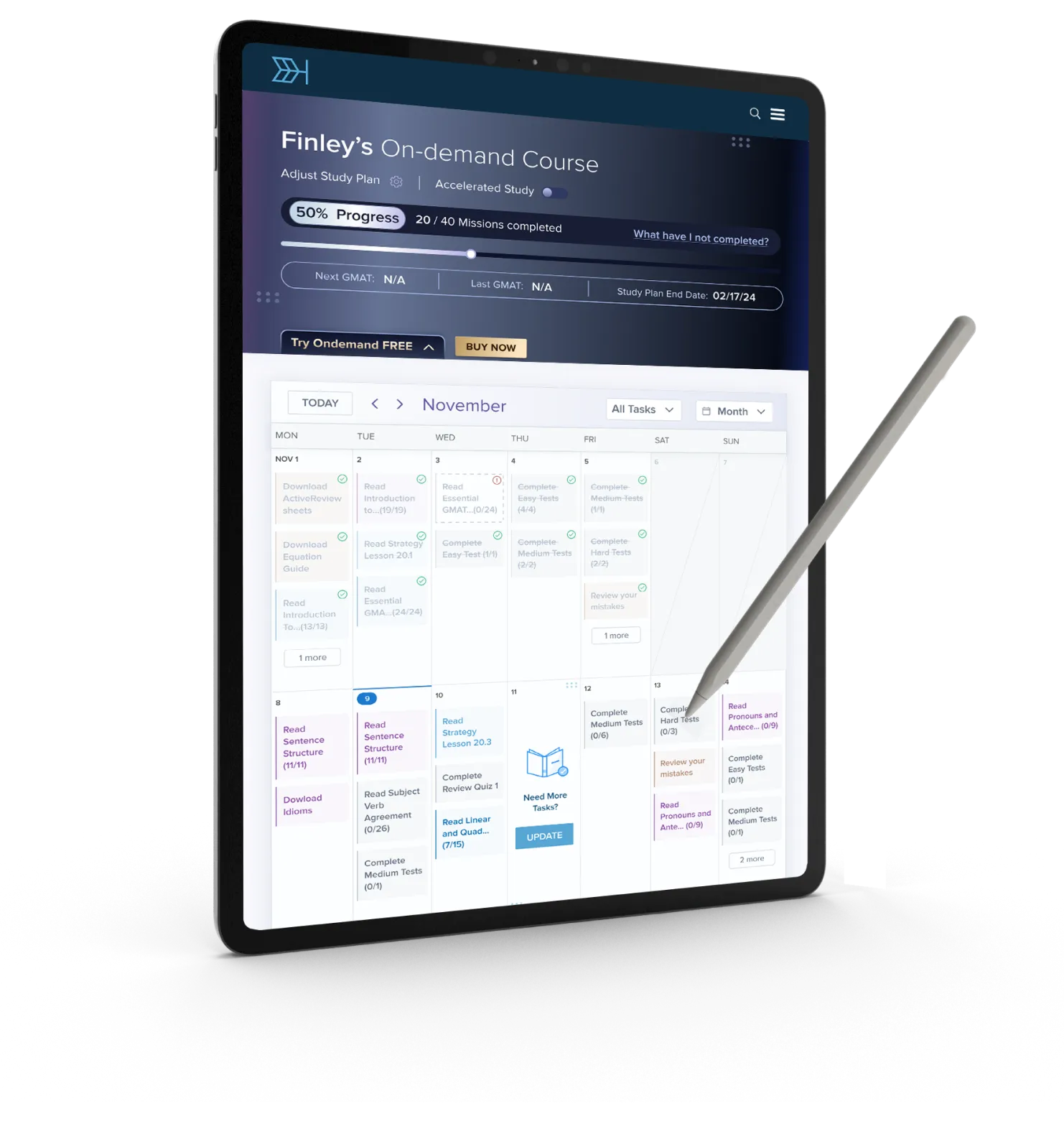
6 months of access to your personal catalog of 400 hours of master-class video lessons, plus all features and content included in the TTP Self-Study course.
Whether you are studying while working full-time, know you’ll have gaps in your study schedule, or simply want more time to learn, OnDemand gives you the flexibility to prepare for the GMAT on your own timeline.
OnDemand includes everything in TTP’s award-winning Self-Study course, as well as 400+ master-class videos led by TTP Founder and GMAT Expert Scott Woodbury-Stewart. OnDemand videos, customized tasks, and personalized homework seamlessly integrate within the TTP Self-Study course.
OnDemand also offers a higher score guarantee (99th percentile/715+) than the Self-Study course, weekly office hours with TTP GMAT teachers and tutors, and a full year of access to the course.
Yes! Our exclusive 99th percentile/715+ score guarantee is included with your OnDemand subscription. Please see the score guarantee page for details.
TTP offers 24/7 chat support with a team of experts who can help you when you’re stuck on GMAT problems or simply have a question about the course. In addition, OnDemand students have exclusive access to weekly office hours with GMAT teachers on Zoom.
Yes! Simply click the “Try OnDemand Now” button at the top of this page. Or, if you currently have a TTP Self-Study trial or have purchased a subscription to the Self-Study course, you can switch to “OnDemand” mode on your Study Plan page.
You can upgrade to OnDemand at the special discounted price listed on this page. The cost of OnDemand is prorated, so you pay only for the days you’re actually subscribed.
An OnDemand subscription gives you six months of access to the videos and features included in the OnDemand course, plus all of the content and features in the TTP Self-Study course.
AutoData 3.38 remains one of the most useful tools ever created for mechanical repairs on older European cars. It is a "must-have" archive for the older vehicle fleet, but it must be supplemented with newer software for modern diagnostics.
Note on "German 3.38": If the version you have is strictly in the German language, the interface remains intuitive if you understand basic automotive terminology (Zündung = Ignition, Drehmoment = Torque). However, English versions of 3.38 are widely preferred internationally for ease of use.
Autodata 3.38 is a legacy version of the professional automotive diagnostic and repair software widely used by workshops for vehicle technical data
. While newer online versions are the industry standard today, the 3.38 version remains popular in some regions for its offline capabilities and coverage of vehicles up to approximately 2011. www.autodata-group.com Key Features of Autodata 3.38
The software serves as a comprehensive database for over 46,000 models from 211 manufacturers. Its core features include: Technical Specifications:
Detailed data on engine timing, fluid capacities, and torque settings. Wiring Diagrams:
Over 420,000 interactive, color-coded diagrams for electrical troubleshooting. Diagnostics:
Extensive lists of Diagnostic Trouble Codes (DTCs) with step-by-step guides for known fixes. Maintenance:
Official service schedules and repair time estimators to assist with workshop management. Setting Up the German Language
Autodata 3.38 is a multi-language application that supports German, along with English, French, and others. Autodata 3.38 Windows 7 64bit - Facebook
Autodata 3.38 (2011) is a legacy version of the professional automotive technical information software used for vehicle diagnostics, repair, and maintenance. While newer online versions now exist, version 3.38 remains popular among enthusiasts for its offline capabilities and coverage of European car models up to the year 2011. Key Features of Autodata 3.38
Comprehensive Data: Includes detailed information on injection systems, timing belts and chains, air conditioning, airbags, and ABS.
Diagnostic Tools: Provides thousands of diagnostic trouble codes (DTCs) and descriptions for engine management and other systems.
Visual Guides: Features interactive wiring diagrams and node layouts to help technicians trace electrical paths.
Service Schedules: Provides manufacturer-specific service intervals and technical specifications. German Language Configuration
The software is natively English-based, but a German Language Pack (often referenced as part of the "Multilanguage" or version 3.38 11 setup) can be applied.
Setup: Typically requires downloading a specific language archive and replacing the existing language folder within the installation directory.
Compatibility: This version was originally designed for older operating systems. To run it on modern hardware (like Windows 10 or 11), users often use virtual machines or specialized 64-bit compatibility fixes. Legacy vs. Modern Versions Autodata 3.38 (Legacy) Modern Autodata Online Connectivity Offline (Installed on PC) Online-only Model Coverage Vehicles up to 2011 99% of vehicles, including Hybrids/EVs Updates Static (no new data) Constant manufacturer updates Accessibility Single device Multi-device (tablet, mobile, PC)
Note: Since this is legacy software, official support is no longer available. For the most accurate and up-to-date information, professionals typically use the Autodata Online subscription. Download Autodata 3.38 Multilanguage - Facebook
Autodata German 3.38 (Build 11) is a specialized version of the comprehensive diagnostic and repair database widely used by automotive professionals and workshops across Europe. Known for its extensive technical specifications and wiring diagrams, this specific iteration remains a staple for technicians working on vehicles produced up until the early 2010s. What is Autodata German 3.38.11?
Autodata is a leading provider of technical information for the automotive aftermarket. Version 3.38.11 represents one of the final standalone desktop releases before the company transitioned to its current "Autodata Online" cloud-based subscription model.
The "German" designation ensures that the interface, technical terminology, and component names are localized for German-speaking markets, which is critical for precision when interpreting complex electrical schematics or torque specifications. Key Features of Version 3.38.11
This version provides a "one-stop-shop" for garage data, including:
Technical Data: Engine oil capacities, tightening torques, and cooling system specifications for thousands of models.
Maintenance Schedules: Precise service intervals provided by manufacturers, including belt and chain replacement intervals.
Interactive Wiring Diagrams: Detailed maps of vehicle electrical systems, which are essential for tracing faults in sensors and ECUs.
Error Codes (DTC): A vast library of diagnostic trouble codes with descriptions to help pinpoint malfunctions during OBD-II scans.
Labor Times: Standardized repair times to help workshops provide accurate quotes to customers. Why This Specific Version?
While newer online versions exist, many independent shops still look for 3.38.11 for several reasons: auto data german 3.38 11
Legacy Support: It offers excellent coverage for "modern classics" and older daily drivers (1990s–2011) that are still common on the road.
Offline Access: Unlike the current subscription model, this version was designed to run locally on a PC, making it useful in areas with poor internet connectivity.
Stability: Build 11 was one of the most stable releases of the 3.3x architecture, known for fewer crashes and faster search indexing. System Requirements and Compatibility
Autodata 3.38 was originally designed for Windows XP and Windows 7. On modern hardware running Windows 10 or 11, users often need to utilize Virtual Machines (VMs) or specific compatibility modes to ensure the software runs without library errors. Conclusion
Autodata German 3.38.11 remains a powerful tool for any mechanic focused on German or European vehicles from the late 20th and early 21st centuries. Its depth of information—ranging from wheel alignment data to air conditioning charging weights—makes it an invaluable asset for the technical library of any serious garage.
Table 2 presents the regression results for the subsample of German automobile manufacturers (n = 11). The estimated coefficient for the variable of interest was 3.38, suggesting a positive association with the outcome measure. Given the limited sample size, these results should be interpreted with caution; however, they align with the theoretical expectation derived from the full dataset.
This brief write-up summarizes and interprets the dataset label "auto data german 3.38 11" for use in documentation, a README, or a data catalog entry.
Summary
Likely contents and scope
Intended uses
Data quality and preprocessing notes (recommended)
Schema suggestions (example)
Evaluation metrics (for ML tasks)
Delivery and versioning
Caveats and open questions
If you want, I can expand this into a README file, generate a sample schema JSON, or draft a changelog entry for version 3.38.11.
Unlocking the Power of Auto Data: A Comprehensive Guide to German 3.38 11
In the rapidly evolving world of automotive technology, the term "auto data german 3.38 11" has gained significant attention among car enthusiasts, mechanics, and researchers. This specific designation refers to a particular dataset or software tool used in the automotive industry, originating from Germany. With a version number of 3.38 11, this data package has become a crucial component in the diagnosis, maintenance, and optimization of modern vehicles.
What is Auto Data German 3.38 11?
Auto Data German 3.38 11 is a comprehensive database of technical information, diagnostic procedures, and repair data for vehicles. Developed by a leading German company, this dataset provides an extensive range of information on various car models, including their technical specifications, wiring diagrams, troubleshooting guides, and repair instructions.
The dataset is designed to support automotive professionals, such as mechanics, technicians, and diagnosticians, in their daily work. With Auto Data German 3.38 11, users can access detailed information on vehicle systems, including engine, transmission, brakes, suspension, and electrical systems. This enables them to diagnose and repair complex problems efficiently, reducing downtime and increasing productivity.
Key Features of Auto Data German 3.38 11
The Auto Data German 3.38 11 dataset offers a wide range of features that make it an indispensable tool for automotive professionals. Some of the key features include:
Benefits of Using Auto Data German 3.38 11
The benefits of using Auto Data German 3.38 11 are numerous. Some of the most significant advantages include:
Applications of Auto Data German 3.38 11
The applications of Auto Data German 3.38 11 are diverse, ranging from automotive repair and maintenance to research and development. Some of the most common applications include:
Conclusion
In conclusion, Auto Data German 3.38 11 is a powerful tool that has revolutionized the automotive industry. With its comprehensive database of technical information, diagnostic procedures, and repair data, this dataset has become an essential resource for automotive professionals. By providing improved diagnostic accuracy, increased efficiency, and cost savings, Auto Data German 3.38 11 has set a new standard for vehicle maintenance and repair. As the automotive industry continues to evolve, the importance of this dataset will only continue to grow.
Review: AutoData 3.38 (2011 Release)
Rating: ★★★★☆ (4/5)
The Verdict Up Front: AutoData 3.38 remains one of the most legendary and reliable versions of the software for home mechanics and small workshops working on vehicles from the mid-90s up to roughly 2011. While it lacks the modern interface and cloud connectivity of the newer online versions (AutoData 4/5), it is a robust, "offline-capable" powerhouse that is incredibly easy to navigate.
Pros:
Cons:
Best Suited For:
Summary: If you are working on a vehicle manufactured before 2012, AutoData 3.38 is arguably the best "bang for your buck" reference tool available. It is stable, fast, and contains the critical mechanical data that matters most to a mechanic. Just don't expect it to help you diagnose the infotainment system on a 2018 model.
The search terms you provided appear to refer to Autodata, a popular technical information system used by automotive workshops. Specifically, "3.38" often refers to a legacy version of the Autodata software frequently found in online forums, while "11" might relate to the year 2011 or a specific update.
While no single "solid blog post" currently exists under that exact title, you can find similar technical resources and automotive data insights through the following platforms:
Auto-Data.net Blog: This site provides a Technical Library and blog covering topics like VIN decoding, engine common problems, and technical guides for various car models.
Autodata Official: If you are looking for professional workshop software, the official Autodata site offers modern cloud-based solutions for vehicle technical data, replacing older versions like 3.38.
Automotive Enthusiast Forums: Discussions regarding version 3.38 (often localized for German/German-speaking users) are common on platforms like Digital Eliteboard or MHH Auto, where users share tips on installation and technical data lookups. Automotive Blog, Reviews, Tests, Technical Library-page1/17
Autodata 3.38, a widely used, offline diagnostic software from circa 2011, provides comprehensive technical data for over 17,000 vehicle models, focusing on engine management, diagnostics, and wiring diagrams for German and European vehicles. The software remains a critical, albeit legacy, resource for independent workshops requiring offline access to data for internal combustion engines produced up to 2011, before the industry-standard shift to online, real-time diagnostic platforms.
For more information on the modern, cloud-based successor, visit Autodata Group.
1. The "Cut-Off" Date The most significant drawback is that the database ends around 2010. If a customer brings in a 2012 Ford Focus or a 2015 Audi A4, this software is useless. It cannot read CAN-bus structures or complex modern module coding required for newer cars.
2. User Interface (Retro) The interface is very "Windows 98." Navigation requires digging through drop-down menus. Unlike modern platforms that let you search by VIN (Vehicle Identification Number), version 3.38 requires you to manually select the Make -> Model -> Engine Code. If you select the wrong engine code, the timing belt diagram will be wrong, which can be dangerous.
3. Installation Difficulties Because this is older software, installing it on Windows 10 or 11 can be a headache. It often requires running as Administrator or using "SimCD" tools to mount the virtual drives properly. It is not plug-and-play for the average user.
4. No Guided Diagnostics Modern tools (like Autel or Bosch Esitronic) offer guided diagnostics that say "Test this sensor, then check this voltage." AutoData 3.38 is a reference library, not a diagnostic guide. It gives you the data, but you have to know how to interpret it.
Verdict: A legendary offline tool for mechanical repairs, but obsolete for modern diagnostics.
This phrase appears to be a compact, possibly garbled, reference that mixes terms. Below I present the plausible interpretations, explain each one, and give examples so you can identify which matches your context.
Summary of likely meanings
Below are structured candidate readings with examples so you can match to your actual use.
How to choose which interpretation applies
Actionable next steps (pick one that fits)
If you want, paste the exact phrase in its original context (filename, sentence, or a short excerpt) and I’ll identify which of the above fits or give a precise explanation.
Autodata 3.38 (2011) is a legacy version of the well-known diagnostic and repair software designed for automotive technicians and workshops. The "German" designation typically refers to the language pack or the specific regional database included in that version. Key Features of Autodata 3.38
Comprehensive Database: It contains technical data for over 17,000 models from 80 different vehicle manufacturers, covering models produced up to 2011. AutoData 3
Technical Information: The software provides wiring diagrams, service schedules, repair times, and technical specifications (such as torque settings and fluid capacities).
Diagnostic Support: It includes trouble code (DTC) lookups and guided tests for engine management, airbags, and ABS systems.
Language Localization: The German version ensures that all technical terminology, component names, and instructions are localized for German-speaking professionals. Historical Context
Released around 2011, version 3.38 was one of the last major "offline" installations before the industry shifted toward cloud-based, subscription-only models (like the current Autodata Training or online diagnostic platforms). This version is often sought after for its ability to run on older hardware without a constant internet connection, making it a staple for shops servicing older vehicle fleets. Important Considerations
Compatibility: Because it was released in 2011, it is optimized for Windows XP or Windows 7. Running it on modern operating systems like Windows 10 or 11 often requires compatibility modes or virtual machines.
Modern Alternatives: While 3.38 is useful for older cars, it lacks data for any vehicle manufactured after 2011 (such as modern hybrids, EVs, or advanced driver-assistance systems).
Legitimacy: Users should ensure they are using licensed versions, as many "3.38" downloads found online are unauthorized cracks that may contain malware or incomplete databases.
Unlocking the Potential of Auto Data: A Comprehensive Guide to German 3.38 11
In the realm of automotive data, few terms have garnered as much attention in recent times as "auto data german 3.38 11". This seemingly cryptic combination of words has piqued the interest of industry insiders, data analysts, and enthusiasts alike. As we delve into the world of auto data, it becomes increasingly clear that German 3.38 11 represents a significant milestone in the evolution of vehicle data standards. In this article, we'll explore the intricacies of auto data, its applications, and the implications of German 3.38 11 for the automotive industry.
What is Auto Data?
Auto data, short for automotive data, refers to the vast array of information generated by vehicles, including sensor readings, vehicle performance metrics, and user behavior. This data is collected through various sources, such as onboard diagnostics (OBD) systems, GPS tracking devices, and telematics units. The sheer volume and complexity of auto data have created new opportunities for analysis, insights, and innovation in the automotive sector.
The Rise of Standardized Auto Data
In recent years, the need for standardized auto data formats has become increasingly apparent. As vehicles become increasingly connected and autonomous, the demand for seamless data exchange between manufacturers, suppliers, and third-party service providers has grown. Standardized auto data formats enable efficient data sharing, reduce compatibility issues, and facilitate the development of new applications and services.
Enter German 3.38 11
German 3.38 11 is a specific iteration of the Auto Data standard, developed by a consortium of German automotive manufacturers and suppliers. This standard outlines a set of guidelines and specifications for collecting, processing, and exchanging automotive data. German 3.38 11 builds upon earlier versions, incorporating new features, such as enhanced data security and improved data quality.
Key Features of German 3.38 11
So, what makes German 3.38 11 so significant? Some of the key features of this standard include:
Implications for the Automotive Industry
The introduction of German 3.38 11 has far-reaching implications for the automotive industry. Some of the potential benefits and consequences include:
Challenges and Limitations
While German 3.38 11 represents a significant step forward, there are still challenges and limitations to be addressed:
Conclusion
In conclusion, German 3.38 11 marks a pivotal moment in the evolution of auto data standards. As the automotive industry continues to navigate the complexities of connected and autonomous vehicles, standardized auto data formats like German 3.38 11 will play a critical role in unlocking innovation, improving safety, and driving growth. While challenges and limitations remain, the potential benefits of German 3.38 11 are undeniable, and its impact will be felt for years to come. As we move forward, it is essential to prioritize education, collaboration, and investment in auto data infrastructure to fully harness the power of German 3.38 11 and shape the future of the automotive industry.
Maximizing Efficiency with Autodata 3.38 (German Edition) For automotive professionals and DIY enthusiasts working on European vehicles, Autodata 3.38 remains a cornerstone software for reliable diagnostics and repair information. While the default installation is often in English, the German version (specifically the 3.38 release) provides localized technical data that is essential for workshops across German-speaking regions. Why Autodata 3.38 is Still a Workshop Staple
Despite newer cloud-based versions being available, version 3.38 is favored for its offline stability and comprehensive coverage of legacy European models. Key features include:
Detailed Wiring Diagrams: Access to precise wiring schematics and node layouts for various electrical systems.
Service Schedules: Manufacturer-standard maintenance intervals and checksheets.
Technical Specifications: Exact data for timing belts, chains, injection systems, and air conditioning. Note on "German 3
Repair Manuals: OEM-licensed guidance for over 46,000 vehicle models. Installation & Language Setup (German)
To utilize the German interface, users typically need to install a specific language pack after the base installation. Autodata 3.38 Language Pack 16 - Wakelet
